Leaking caps that pass visual inspection, torque readings that vary across the same production run, seal failures that only show up after filling — these are the quality problems that packaging manufacturers spend significant time and cost managing. The frustrating part is that they often originate not in the filling line or the capping equipment, but in the cap itself. A Plastic Cap Mould that produces caps with dimensional variation introduces seal inconsistency before the bottle ever reaches the production floor, and no amount of downstream adjustment fully compensates for that upstream problem.
Why the Mould Is Where Seal Consistency Begins
The Cap Is Only as Consistent as the Tool That Made It
Injection moulding produces caps by forcing molten plastic into a cavity under pressure and allowing it to solidify in the shape of that cavity. The finished cap carries a precise record of every dimension in the mould — the sealing surface geometry, the thread profile, the liner recess depth, the wall thickness distribution. If those dimensions are consistent across every shot and every cavity, the caps will seal consistently. If they vary, the seal will vary with them.
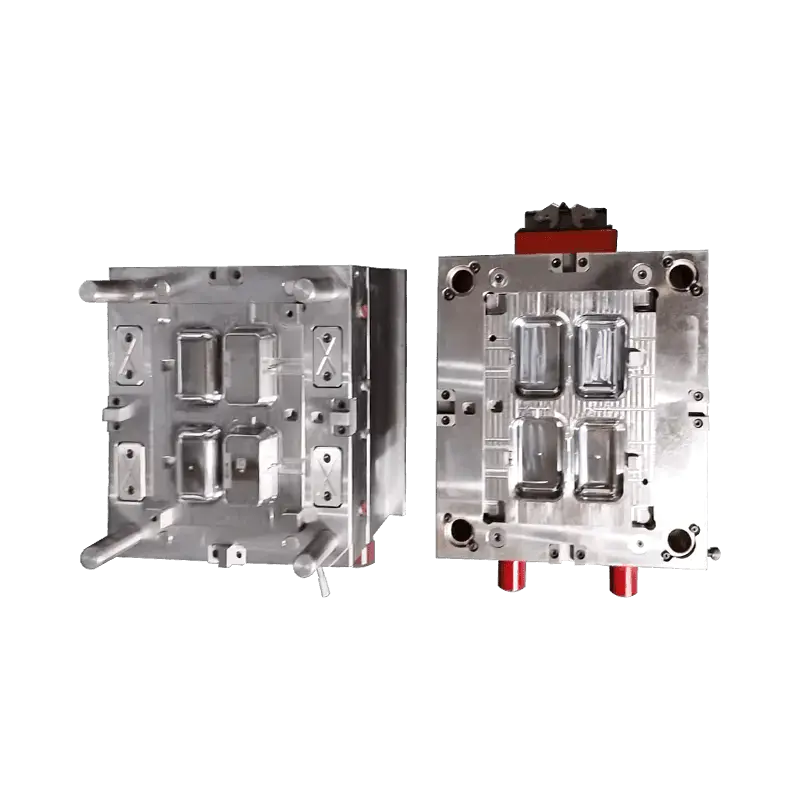
This is why tooling quality is the foundation of cap seal performance. Capping torque, liner compression, thread engagement depth — all of these are downstream results of decisions made during mould design and manufacturing.
How Does Thread Accuracy Affect Seal Performance?
Thread Geometry Determines How the Cap Engages the Bottle Finish
The thread on a cap and the thread on a bottle finish are designed to work together within a defined tolerance range. When the cap thread profile is accurate and consistent, every cap engages the bottle at the same depth, applies consistent downward pressure on the liner, and reaches the seal position at a predictable capping torque.
When thread geometry varies — even within ranges that look acceptable individually — the engagement behavior changes. Some caps seal at a lower torque than intended, leaving insufficient liner compression. Others require higher torque to reach the seal position, creating stress in the thread that can affect closure retention. Neither condition is visible at the capping station, but both create seal quality problems in the field.
Key thread dimensions that affect seal consistency:
- Thread pitch: the distance between thread starts, which determines how far the cap travels per rotation
- Thread depth: how far the thread projects from the cap wall, which affects engagement strength
- Thread rise angle: the angle of thread ascent, which affects the capping torque needed to reach the seal position.
- Thread start position: where the thread begins relative to the cap opening, which affects how the cap aligns with the bottle finish
A Plastic Cap Mould with tight thread cavity tolerances produces caps where all of these dimensions fall within the narrow range needed for consistent seal engagement.
The Sealing Surface: Where the Actual Leak Prevention Happens
Sealing Surface Finish and Flatness Determine Liner Performance
Caps seal by compressing a liner or inner seal against the bottle finish. The quality of that seal depends on how evenly and fully the sealing surface contacts the liner across its circumference. A sealing surface that is not flat, that has surface marks from ejection, or that varies in depth between cavities produces uneven liner compression — which means some areas of the seal are under-compressed and potentially not sealing at all.
Mould design elements that affect sealing surface quality:
- Gate location relative to the sealing surface: poorly located gates create weld lines or flow marks on the sealing surface that affect surface quality
- Cavity surface finish: a well-polished sealing surface produces a smooth cap sealing face that contacts the liner evenly
- Ejector pin placement: ejector marks on or near the sealing surface create local distortions that affect liner contact
- Cooling channel proximity to the sealing surface area: uneven cooling produces warping that changes the flatness of the sealing surface after ejection
Multi-Cavity Moulds and the Consistency Challenge
Why Cavity-to-Cavity Variation Is a Hidden Quality Risk
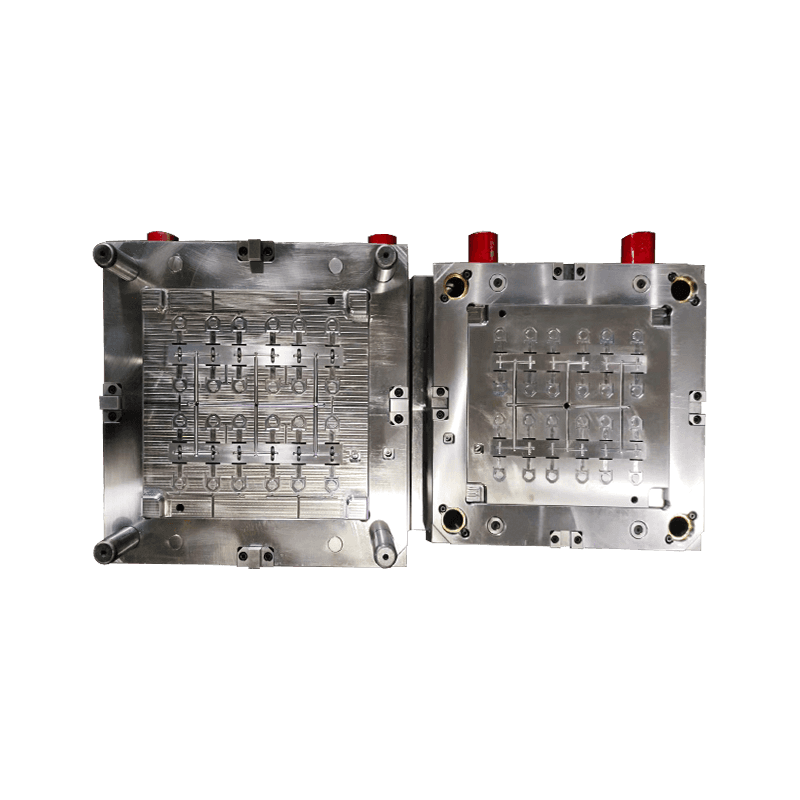
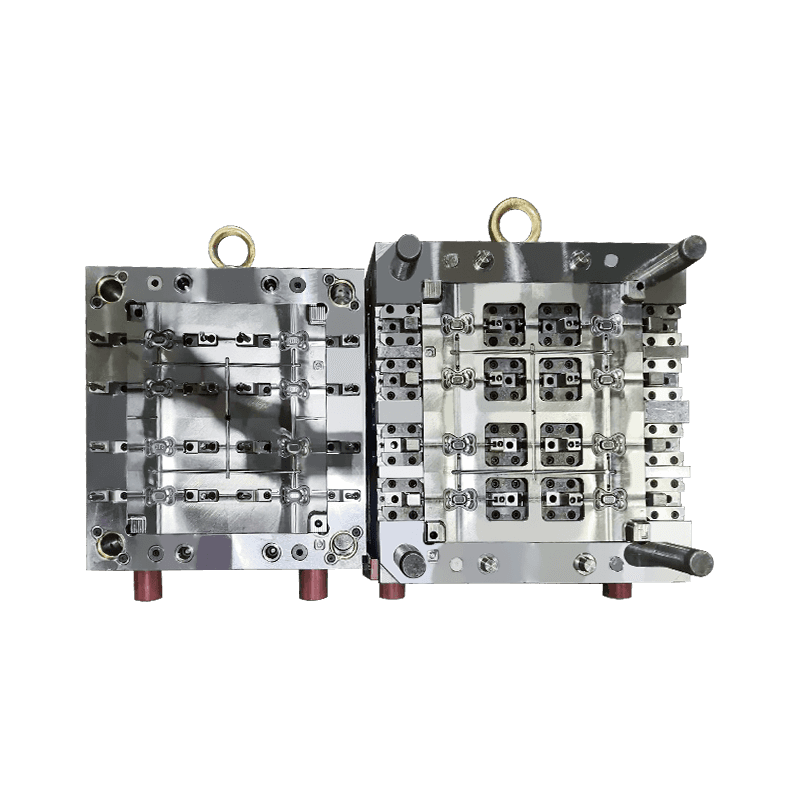
Production-scale cap moulding often uses multi-cavity tools to reach the throughput needed for commercial packaging operations. Each cavity in the mould produces one cap per shot. If all cavities produce identical caps, the lot is consistent. If cavity-to-cavity variation exists — even subtle differences — the production lot contains a distribution of cap dimensions rather than a single consistent specification.
This variation becomes a problem because caps from different cavities are mixed together during filling and capping. If some cavities produce caps at the tight end of the acceptable range and others produce caps at the loose end, the filled products will have a range of seal qualities rather than a uniform seal performance.
Sources of cavity-to-cavity variation in a multi-cavity Plastic Cap Mould:
- Unbalanced runner system: cavities fed by longer or less balanced runners fill at different rates and pressures, producing dimensional differences
- Non-uniform cooling: cavities with different cooling channel configurations or distances from cooling circuits cool at different rates
- Cavity machining variation: tolerances that accumulate differently across each cavity during manufacture
- Differential wear: high-use cavities wearing faster than others over the mould's service life
Hot Runner Systems and Their Effect on Shot Consistency
Controlled Melt Delivery Reduces Variation Across Cavities
Hot runner systems maintain the plastic in a molten state throughout the runner system, delivering melt to each cavity gate at a consistent temperature and pressure. This contrasts with cold runner systems where the runner solidifies with each shot and is typically removed as waste or recycled.
For seal consistency, the temperature uniformity of a hot runner system is significant. When every cavity receives melt at the same temperature and pressure, the filling behavior in each cavity is more uniform, which produces more consistent part dimensions. Variations in melt temperature — which occur when some drops in a hot runner system run hotter or cooler than others — translate into dimensional variation in the finished caps.
A well-designed hot runner system for cap moulding includes:
- Balanced manifold design that delivers equal melt pressure to each gate
- Individual zone temperature control for each drop
- Gate design that produces a clean vestige and does not create cold slugs that affect filling
How Cooling Design Affects Dimensional Stability
Uneven Cooling Is a Direct Cause of Warping and Seal Surface Distortion
When a cap solidifies unevenly — one side cooling faster than the other, or the sealing surface cooling at a different rate than the thread area — internal stresses develop in the material. After ejection, these stresses can cause the cap to warp slightly as it reaches ambient temperature. On a flat sealing surface, even small warping changes the contact geometry with the liner.
Cooling system design elements that support dimensional consistency:
- Conformal cooling channels that follow the cavity geometry and maintain uniform wall distance from the cavity surface
- Balanced flow paths that deliver equal cooling to each cavity
- Sufficient cooling time in the cycle to allow full solidification before ejection
- Core and cavity cooling balanced to prevent differential shrinkage between the cap's inner and outer surfaces
Comparing Mould Design Factors and Their Impact on Seal Consistency
| Mould Design Factor |
How It Affects Seal Consistency |
Risk When Poorly Executed |
| Thread cavity tolerance |
Determines engagement depth and torque consistency |
Variable thread engagement, inconsistent sealing force |
| Sealing surface finish |
Controls liner contact uniformity |
Uneven compression, localized leak paths |
| Runner balance |
Affects fill pressure uniformity across cavities |
Cavity-to-cavity dimensional variation |
| Hot runner temperature control |
Controls melt consistency at each gate |
Dimensional variation from melt temperature differences |
| Cooling channel design |
Affects solidification uniformity |
Warping, sealing surface distortion |
| Ejector pin placement |
Affects surface quality near sealing areas |
Surface marks that disrupt liner contact |
| Mould steel quality |
Affects wear rate and long-term dimensional stability |
Progressive cavity wear, dimensional drift over time |
Does Mould Material and Steel Grade Affect Long-Term Seal Consistency?
Tool Steel Quality Determines How Long Consistency Is Maintained
A mould that produces consistent caps on day one but drifts in dimension after a few hundred thousand shots is not a long-term solution. The steel grade used for cavity inserts and core components determines how well the mould holds its dimensions across its service life.
High-hardness tool steels resist wear at the thread features, gate areas, and sealing surfaces that experience considerable contact stress during each cycle. Softer or lower-grade materials allow these critical features to wear progressively, which translates directly into dimensional drift in the caps produced and, eventually, into declining seal performance.
For high-volume cap production, mould material selection is a lifetime cost question as much as an upfront quality question. A mould that requires cavity replacement or repair after a fraction of its projected service life due to premature wear costs more in total than a higher-specification tool that maintains its dimensions across the full production run.
What to Look for When Evaluating a Cap Mould Supplier
Technical Capability Questions That Reveal Actual Quality Standards
Evaluating a mould supplier for cap production involves more than reviewing a capability statement. The questions that reveal actual quality standards tend to be specific:
- What steel grades are used for cavity inserts and core components, and what hardness is achieved after heat treatment
- How is runner balance verified — through mould flow analysis during design, through trial results, or both
- What cooling channel design approach is used, and how is uniform cooling across cavities confirmed
- How are cavity dimensions verified after manufacture, and what documentation is provided
- What quality control is in place for hot runner system temperature uniformity
- What is the supplier's approach to mould validation before full production approval
- What after-sales support is available for maintenance, repair, and cavity replacement over the mould's service life
Suppliers who can answer these questions specifically and provide documentation to support their answers are demonstrating a different level of technical engagement than those who answer in general terms.
How Production Volume Affects Mould Specification Decisions
Higher Volume Raises the Stakes for Every Specification Choice
The relationship between mould quality and production economics becomes more pronounced at higher volumes. A mould producing caps at a low volume can tolerate more variation in process parameters because the absolute number of defective caps remains manageable. At production scales where millions of caps are filled each month, even a small percentage of seal failures produces a volume of field issues that creates significant cost and brand exposure.
Cap producers planning for high-volume production should evaluate:
- Whether cavity count and cycle time are matched to production capacity needs
- Whether the mould specification supports the projected service life without requiring major maintenance before the business case has been recovered
- Are the hot runner system, cooling design, and cavity tolerances specified for the production rate and cap material planned, not just for low cost tooling that will technically produce a cap?
Seal consistency in cap production is a cumulative result of tooling precision decisions made before any cap is ever moulded. Thread accuracy, sealing surface quality, cavity-to-cavity uniformity, cooling consistency, and the material quality that maintains all of those properties across a service life — these are not variables that can be corrected through process adjustment on the production floor. They are designed in, or they are absent. Taizhou Yiwei Mold Co., Ltd. manufactures Plastic Cap Mould tooling for packaging applications across beverage, food, personal care, and pharmaceutical sectors, working with cap producers and OEM packaging manufacturers on mould specification, cavity configuration, and technical requirements for seal-critical applications. If you are evaluating tooling options for a new cap project or reviewing the performance of existing tooling, reaching out to their technical team is a practical next step.



 English
 中文简体
中文简体 русский


Contact Us